
Academic excellence alone is not enough in modern education because grades and test scores measure only a small part of what a student can do. They tell us nothing about how well someone handles emotions, bounces back from setbacks, or works with others.
Instead, the pressure on students to get good grades has never been higher. Parents, universities, and employers all focus on results, which adds stress to an already demanding environment. This pressure can harm mental health. A UCL review of 52 studies found that students under high academic pressure are more likely to experience anxiety, depression, or suicidal thoughts.
So, we end up with young people who may pass their exams but struggle with stress, self-awareness, and forming meaningful connections.
In this post, we will explore how holistic education offers a better way forward. You will learn why supporting the whole child leads to stronger, more adaptable individuals. We will also share practical ideas that schools and families can use to put this approach into action.
First, we’ll explain holistic education and its growing importance today.
What Is Holistic Education and Why Is It Important Now More Than Ever?
Holistic education is a way of teaching that looks after the whole child instead of just their grades. It focuses on emotional, social, physical, and ethical growth alongside academic skills. Let’s look at how it works and why so many schools are starting to pay attention.
A Broader Vision of Learning
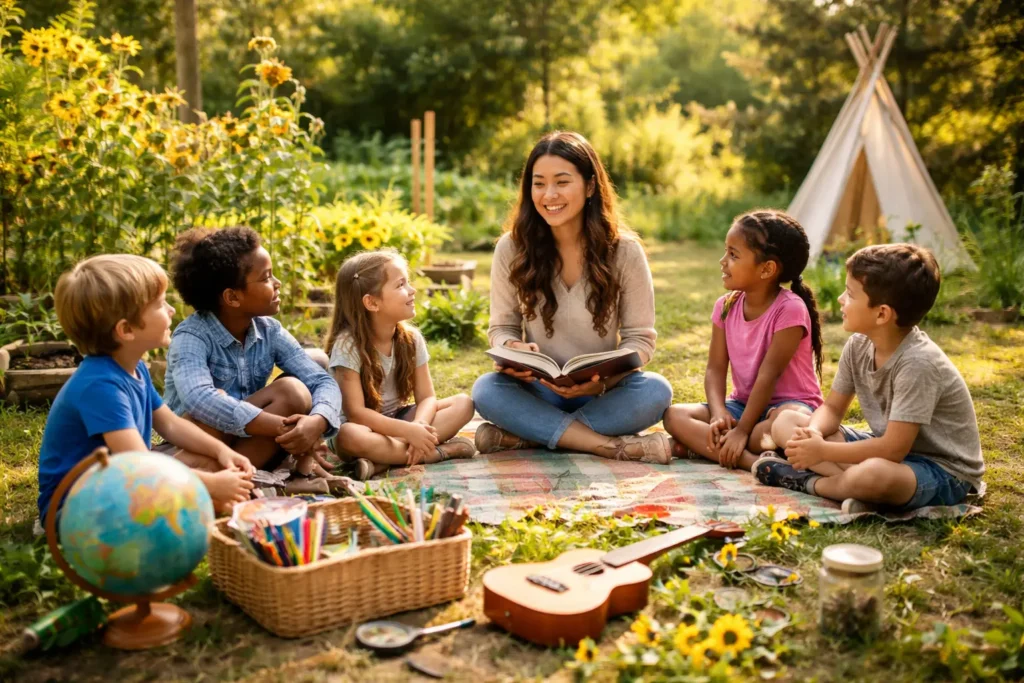
Holistic education sees students as complete human beings. That means their minds, bodies, and emotions are all connected and valuable for learning, growth, and overall well-being. The goal is to help children build self-awareness, empathy, resilience, and creativity right alongside their reading and math skills.
Your teachers in these settings will focus on the learning process itself rather than just exam results at the end. And because every child learns differently, this approach gives students room to grow at their own pace.
For example, some children might be brilliant at science but need support with social confidence. Others might be creative thinkers who struggle with traditional tests. Holistic educational models make space for all of these differences.
The Roots of Holistic Thinking in Education
This idea of educating the whole child (developing intellect, creativity, and practical skills together) has been around for over a century. Rudolf Steiner founded the first Waldorf school in Germany back in 1919 with this approach. His focus was on developing intellect, creativity, and practical skills together as one.
Around the same time, Maria Montessori, an Italian physician and educator, created her own method. Her approach centred on self-directed learning and hands-on experiences.
What is interesting is that modern neuroscience now backs up many of these early ideas. Research from Arizona State University‘s Centre for Whole-Child Education found that cognitive processes like memory and attention are strongly influenced by how we feel emotionally.
Put simply, when students feel safe and supported, their brains process information more effectively. They can focus more easily and remember more of what they learn.
Busting the Myths About Holistic Education
Some people hear “holistic education” and assume it means no structure or no academic rigour. That is a common misunderstanding. These programmes still teach reading, writing, maths, and science. The difference is that they also include emotional intelligence, creativity, and practical life skills. Students still face challenges and are held to high standards.
Another myth is that this approach is somehow anti-academic. But many high-functioning leaders and creative thinkers were educated in Montessori or Waldorf schools. This includes Google founders Larry Page and Sergey Brin, Amazon’s Jeff Bezos, and Wikipedia’s Jimmy Wales. These are not people who avoided hard work, but were simply taught to think differently and to see problems from multiple angles.
We’ve also seen that students who feel emotionally supported engage more fully with their studies. They ask better questions, take more risks, and feel more ownership over their own learning.
Holistic Approaches Lead to Better Academic Performance
Now, you might be surprised to learn that students in holistic learning environments often perform better academically than those in traditional schools. This is backed by CASEL’s review of over 270,000 students. It showed that social and emotional learning programs raised academic achievement by 11 percentile points.
And the benefits of these programs continue after graduation. Follow-up research found that students who participated still scored 13 percentile points higher years later.
This happens because when children feel safe, connected, and understood, they focus better and remember more. Over time, they also develop a genuine love for learning that stays with them.
Practical Ways to Balance Academics and Personal Growth in Schools
Helping students grow academically and personally doesn’t need a complete overhaul of your school or a big budget. What it does require is a willingness to think differently about how we teach and how we measure progress.
Below, we will walk through practical strategies that any school can start using right away.
Experiential Learning in Action
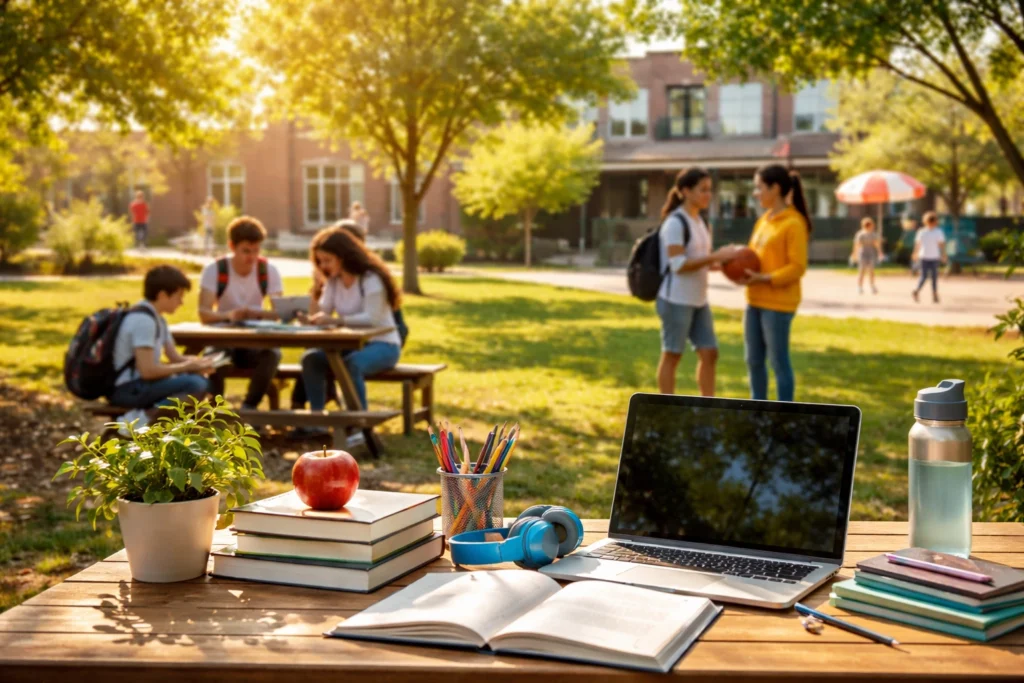
Experiential learning is when students learn by doing, rather than by listening or reading. For example, instead of reading about nature in a textbook, children might plant a school garden or explore a local park. These experiences often continue into community service, where students put their learning into real-world practice.
A PMC review also found that this kind of outdoor, hands-on learning improved students’ personal and social development, along with their mental health and wellbeing.
We’ve seen how projects that combine science, maths, and art around one topic can increase engagement as well. The reason is simple: students remember what they experience far longer than what they memorise.
Building Emotional and Social Skills
Social Emotional Learning, or SEL, teaches students how to understand their feelings, get along with others, and handle difficult situations. It sounds complicated, but you’re already familiar with the tools. Journaling, morning circle time, and group problem-solving activities all fit under this umbrella.
Classrooms with regular morning and closing circles, in particular, can help students feel connected and supported throughout the day. These circles also improve focus, communication skills, and resilience when challenges arise. Even a quick daily check-in, where each student shares one word about how they feel, can set a positive tone for learning.
Rethinking How We Measure Success
As we mentioned, exams only measure what students can recall under pressure, but they miss creativity, growth, and the ability to apply knowledge in new situations. Portfolios offer a better approach.
Basically, your students will keep a folder (digital or physical) where they’ll collect their best work over time, like essays, science experiments, art projects, or math assignments. But you need to clarify that the portfolio tracks their progress (and not just grades).
Then, your students will be encouraged to reflect on each piece: What did they learn? What could they do differently next time? This reflection will help them see their growth and understand how their skills develop, which gives learning a more personal and meaningful focus.
Student-led conferences take this a step further by putting young people in charge of explaining their own progress to teachers and parents. This change is important because it shows what students know, what they can do with that knowledge, and how they have developed personally.
Making Holistic Education Work Anywhere
Now, what if your school doesn’t have the money for new programmes? Well, the good news is that many of the best strategies cost very little. Reflective journaling, for example, only requires paper and a few minutes each day. Peer support groups (where older students mentor younger ones) only need a small meeting space and occasional teacher oversight, but deliver strong results.
According to MENTOR, cross-age peer mentoring helps under-resourced schools improve both academic and social outcomes without large financial investments. Community mentors, like local business owners or retired teachers, can volunteer their time to guide students. This shows that creative thinking(not money) is what sets schools focused on the whole child apart from those following old patterns.
Help Students Achieve Both Academic Success and Life Readiness
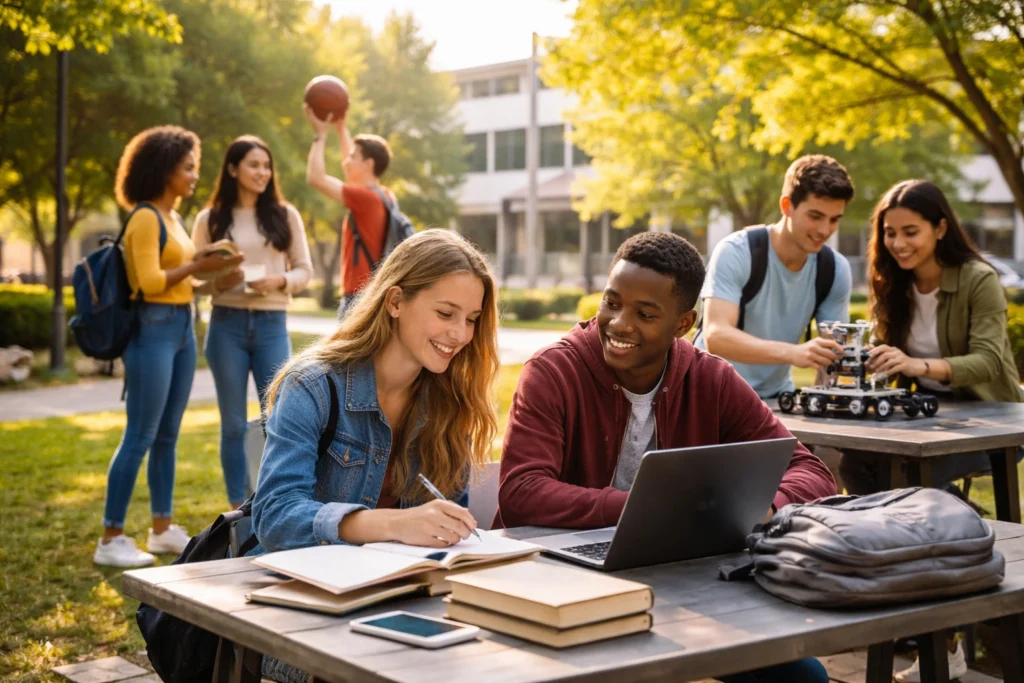
So, what do you now think about academic excellence? Do you think it can alone prepare students for the challenges they will face after school? We would love to hear your thoughts on this.
Now, let us be clear about something. Strong academic performance is still important, and it always will. Good grades open doors to universities, scholarships, and career opportunities. But these grades alone won’t make a person ready for real life.
A better student development means being able to bounce back from setbacks and work well with others. It also involves having confidence in your own abilities and the self-direction to keep learning even when no one is pushing you. And perhaps most importantly, it means having a sense of purpose, a reason to get up in the morning and contribute something meaningful.
So what can we do about this? If you are an educator, consider adding whole child strategies into your classroom. Small changes, like morning check-ins or reflective journaling, can change the culture over time.
As a parent, look for schools that value emotional and social growth alongside academics. Please, support those schools when you find them. And if you are a policymaker, create space for flexibility in curriculum, so teachers have room to focus on educating the whole person..
Want to learn more about preparing students for life? Visit Juergens Meyer for more resources on holistic education and student wellbeing.