Before choosing a London school, you need to understand catchment areas, school types, visit red flags, application deadlines, and common placement mistakes.
But it can feel overwhelming if you have no idea where to start or what to prioritise.
We’ve worked with London families for over two decades and have seen what separates parents who get their first-choice schools from those who don’t. And from our experience, it ultimately comes down to knowing what to look for and when to act.
This guide shows you exactly how to navigate London’s school system (minus the stress). You’ll learn:
- The main types of schools in London, and which might suit your child
- How catchment areas actually work (and the mistakes parents make)
- What to look for during school visits that league tables won’t tell you
- Timeline tips so you don’t miss critical deadlines
- Common mistakes that cost parents their first-choice placement
Ready to make a confident school decision? Let’s get started.
What Are the Different Types of Schools Available in London?
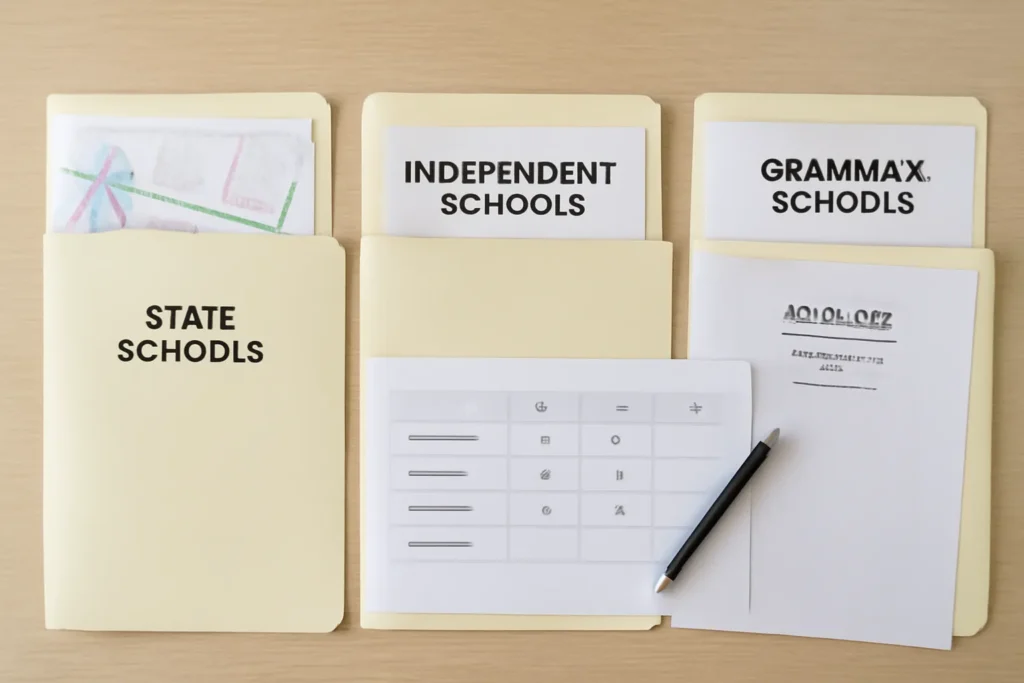
London education splits into three main routes: free state schools, pricey independent schools, and grammar schools for exam-ready students. Each comes with its own admission rules and costs (or lack thereof). Let’s break down each option, starting with state schools.
State-Funded Primary And Secondary Schools
These are your free options, funded by local authorities across London. Most primary schools and secondary schools follow the National Curriculum with standard term dates and consistent learning goals. They also provide support for pupils with special educational needs.
Sounds simple enough, right? Not quite. State schools admit students based on proximity, which means where you live determines your options.
Children living closest to the school get priority, though catchment areas can shrink to just a few streets for popular schools. If you live 300 metres away, you might still miss out if 200 families live closer.
Independent Schools And Faith-Based Institutions
If state school catchment areas feel too limiting, independent education offers an alternative (though you’ll pay for it). These schools don’t follow catchment rules, so you can apply regardless of where you live. The trade-off? Cost.
According to the Independent Schools Council’s 2025 data, as reported by Statista, the average annual fee for UK private day schools is £18,456. In London specifically, these fees typically range higher, from around £17,000 to over £30,000 per child, depending on the school and age group.
Now, if those fees feel out of reach but you still want an alternative to standard state schools, faith schools might be your middle ground. Some charge fees, whilst others are state-funded, but they all want proof that you practice the faith. Think church attendance records or baptism certificates.
So what makes independent and faith schools worth considering? The main draws are smaller class sizes, extensive after-school clubs, and programmes beyond the National Curriculum. Many also offer International Baccalaureate options that focus on global education and research skills.
Grammar Schools And Selective Admissions
Grammar schools are the best route to take if your child excels academically. These admit students purely on exam performance through the 11-plus entrance exam taken in Year 6.
The downside, however, is location. Grammar schools only exist in three London boroughs: Barnet, Bexley, and Sutton. Competition is fierce, too, with some schools accepting only the top 10% of students who take the exam each year.
How Catchment Areas Really Work in London
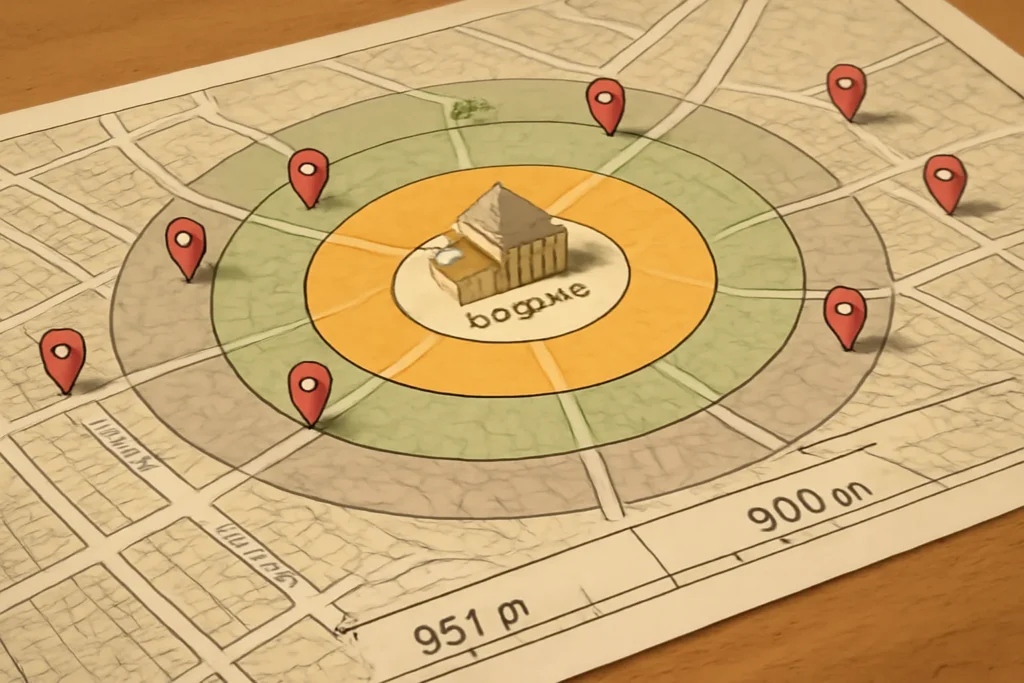
Your dream school might be 300 metres away, but if you live at 251 metres, you could miss out. That’s how precise catchment areas can be for popular London primary schools.
For oversubscribed schools, catchment areas can shrink to just a few streets. And living inside a catchment zone doesn’t guarantee admission if siblings or faith criteria take priority. These applicants fill spots before distance even matters.
The official catchment maps on council websites give you a general idea, but last year’s admission distances tell the real story. For example, if a school’s catchment radius was tight last year, expect similar or tighter boundaries this year (especially when sibling applications are high).
Pro tip: Check how many sibling applications the school typically receives. That’s your actual competition, not the pretty boundary lines on the map.
What to Look for During School Visits
Open days are lovely, but a Tuesday morning visit shows you what school life actually looks like. We’ve worked in London education for years, and the most revealing visits happen on ordinary weekdays. This is because teachers aren’t putting on a show, and you see how things really run.
So what should you actually watch for?
Observing Daily Routines And Teacher Interactions

Forget the polished presentations. What you really need to see is how the school operates on a normal day. Once you’re there, visit during regular school hours and watch how teachers manage their classrooms when inspectors aren’t around.
Pay attention to transitions between lessons or break times, like how staff interact with pupils. Are they patient when children ask questions, or rushing them along? These moments let you notice how teachers and students interact in real time. You might see a teacher patiently answer a question or calmly guide a group through a task, which tells you a lot about the daily atmosphere.
Quick tip: Watch whether students seem engaged or just going through the motions.
Speaking with Parents Outside the School Gates
Parents who collect children at pickup time give you the most honest version. They’ll tell you about communication issues, how the school handles concerns, and whether teachers respond to emails.
Don’t be shy about asking specific questions, either. Ask about homework policies, after-school clubs, and how the school deals with behavioural issues. Some parents will also share experiences about class sizes, teacher turnover, and whether their children get proper support when they’re struggling.
The truth is, these conversations count more than the head teacher’s speech at open days.
What Ofsted Ratings Actually Tell You
Ofsted is the government body responsible for education standards, inspecting and rating schools across England. They assess teaching quality, leadership, and how well pupils are learning. When a school gets inspected, that rating genuinely reflects what inspectors saw on those days.
The problem? Time moves on, but the rating stays put.
Let’s say that the “Outstanding” school you’re excited about got its badge in 2021. Since then, the head teacher took a job elsewhere, three deputies retired, and half the staff turned over. You’re looking at last week’s weather forecast and planning tomorrow’s picnic.
What actually helps: check when the school was last inspected. Anything over two years old here needs a closer look. Schools rated “Good” with recent inspections often outperform “Outstanding” schools, still coasting on old ratings.
Parent reviews are also important. Other parents will tell you if teaching quality dropped after key staff left. Progress scores show whether pupils actually improve year on year, not just final exam results.
Bottom line: Use Ofsted as your starting point, then verify with current information. The rating tells you what the school WAS, not necessarily what it IS.
Application Deadlines You Cannot Afford to Miss

The school admissions process in London runs on strict dates, and many parents new to London education don’t realise how quickly they arrive. Missing deadlines by even a few days can leave you scrambling for whatever places remain in March.
According to the GOV.UK’s official school admissions guidance, primary school reception applications close on 15 January for September entry the following year. At that point, your child will be three or just turning four, which may feel incredibly early, but that’s how the system works.
Secondary school applications close even earlier, on 31 October. That’s nearly a year before students start secondary school, so you’ll be visiting schools and making decisions while your child is still in Year 6.
Now, what happens if you miss these dates? Your local authority will still find a place for your child, so don’t panic.
They often process late applications after all on-time submissions. This means many schools, especially popular ones, have already filled their spaces. You’ll likely get whatever’s available, and that’s usually nobody’s first choice.
Mistakes That Cost Parents Their First Choice School

Right, you’ve got the timing down, and you understand catchment zones. But knowing the rules doesn’t mean you’ll avoid mistakes. Even if you know the deadlines and distances, it’s easy to overlook how sibling priority or faith criteria actually work in practice.
We see the same errors every admissions cycle, and they’re surprisingly easy to make:
- Listing Only One School: Parents think it shows commitment, but schools don’t see your preference order. If you don’t get in, you’re left with whatever the local authority assigns you.
- Assuming Catchment Guarantees Admission: Sibling policies and faith school criteria can push you down the list even if you live next door to the school. Check the actual admissions policy first.
- Skipping Regular School Visits: Open days show the polished version. Visit on a regular school day to spot red flags about staff turnover or overcrowded classrooms.
- Ignoring Transport Realities: That 30-minute drive becomes an hour in traffic, twice daily. Working parents especially underestimate how exhausting the school run gets after the first term.
Most of these mistakes come from assumptions rather than actual research. Take the time to verify what you think you know.
Matching Schools to Your Child’s Learning Style
Every child responds to education differently. Some children thrive in quieter classrooms with structured routines, while others need more group work and creative activities. There’s no universal “best school,” just the right fit for your family.
You now understand the different school types, how catchment areas work, what to watch during visits, and the common mistakes families make. Start visiting schools, talk with other parents, and trust your instincts during those tours.
If you’d like a little extra help, we’re here for you. Jurgens Meyer has over 20 years of experience providing personalised learning in London. Contact us today to learn more about how we support students.