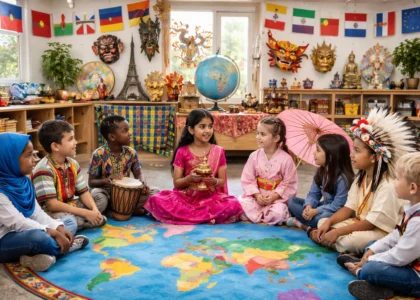
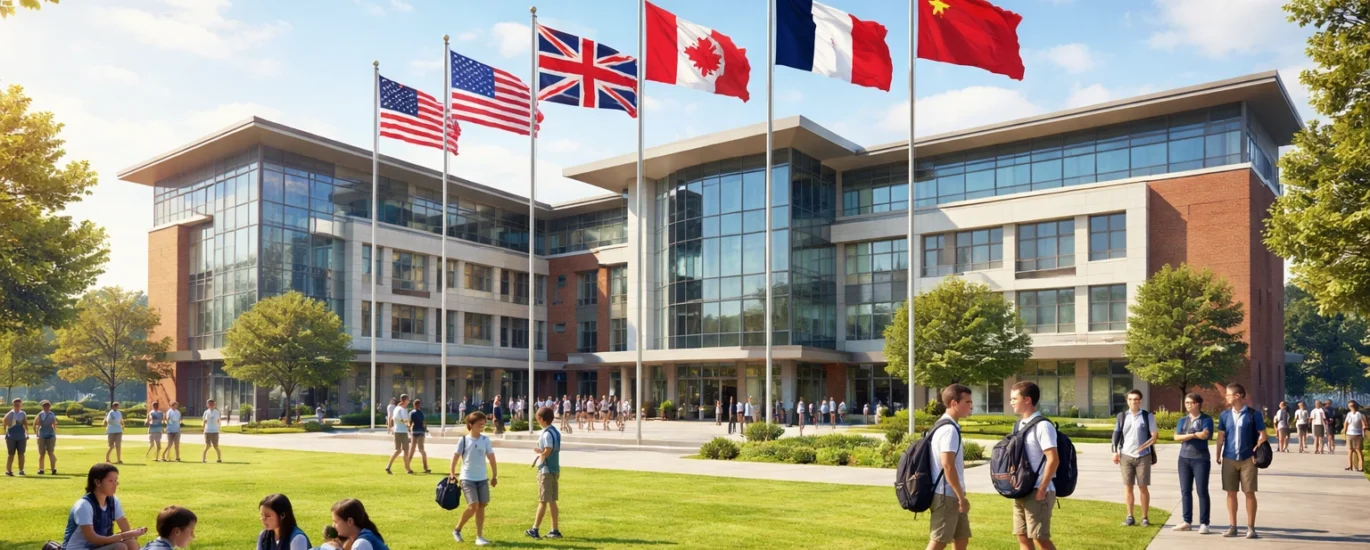
International education appeals to more families today because it prepares children for a world that rewards adaptability, communication, and genuine academic grounding. The demand is growing fast. But with so many schools, curricula, and programmes to weigh up, narrowing down the right option takes effort.
This concern lingers in parents because concerns about curriculum fit and long-term value come up time and again. And honestly, those concerns are completely valid. We have seen them up close, and we understand them well.
In this article, we cover education trends, what international schools genuinely offer, how bilingual learning builds lasting language skills, and what study abroad does for university applications.
Let’s get into it.
What the Latest Education Trends Tell Us About Family Priorities
Education trends show families are moving towards international schools for stronger academic outcomes and broader life skills. According to ISC Research, the number of international schools worldwide has grown consistently over the past few years.
Parents are paying attention, and their priorities have shifted in some telling ways. Let’s have a look:
- Global Employability: Employers now expect cross-cultural competence as a baseline. Parents recognise this. And many are actively seeking education systems that teach students how to collaborate and communicate across different working cultures. International schools build this into the curriculum from day one, not as an add-on.
- Recognised Qualifications: The International Baccalaureate carries real weight with universities. Many families choose international schools because the IB diploma is accepted across Europe, North America, and Asia. No additional entrance qualifications needed.
- Real-World Preparation: Communication skills, problem-solving, and cultural awareness need deliberate teaching. International schools build these into everyday classes through group projects and real-world case studies. And that’s how students get consistent practice long before they need these skills professionally.
International schools back these priorities up with some concrete offerings, and that is exactly what we cover next.
International Schools: What Families Are Getting
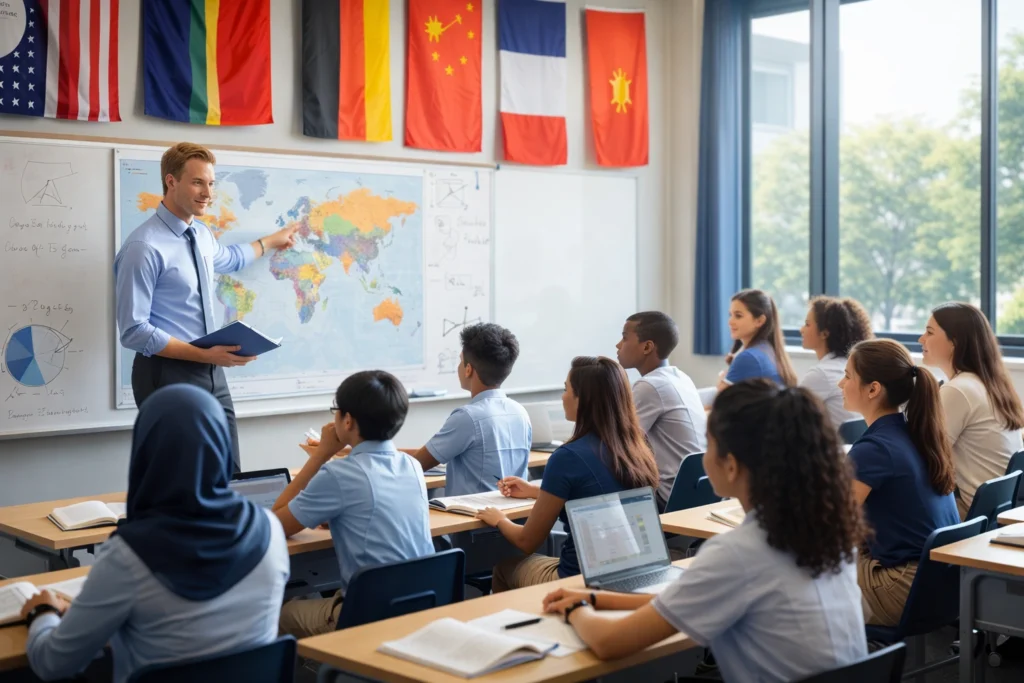
A strong international school delivers globally recognised qualifications, diverse teaching approaches, and structured student support. The best ones do all three consistently, across every year group.
Once families look past the brochure, three things stand out:
A Curriculum Built for the Real World
International schools draw their programmes from multiple education systems. Many combine the IB diploma framework with elements from the American school system. The result is a learning environment where students analyse, question, and apply knowledge across subjects rather than memorising content for a single national exam. That kind of training builds university-level thinking early.
Recognised Qualifications That Travel
As we mentioned earlier, the International Baccalaureate and American school curricula are recognised by universities across Europe, North America, and Asia. No conversion and no additional entrance exams required.
In short, a student with an IB diploma can apply broadly and competitively, which is something most national school systems simply cannot offer.
Support That Goes Beyond the Classroom
You’d be surprised to learn that good international schools take student well-being seriously alongside academic performance. What’s more, trained counsellors, structured pastoral care, and learning support programmes follow internationally recognised standards across every year group.
Our experience tells us that this consistency in support is one of the strongest reasons families stay with international schools long-term.
All of this adds up to something that goes well beyond a standard school experience, and the academic side of it runs the deepest.
How a Global Curriculum Builds Critical Thinking in Students
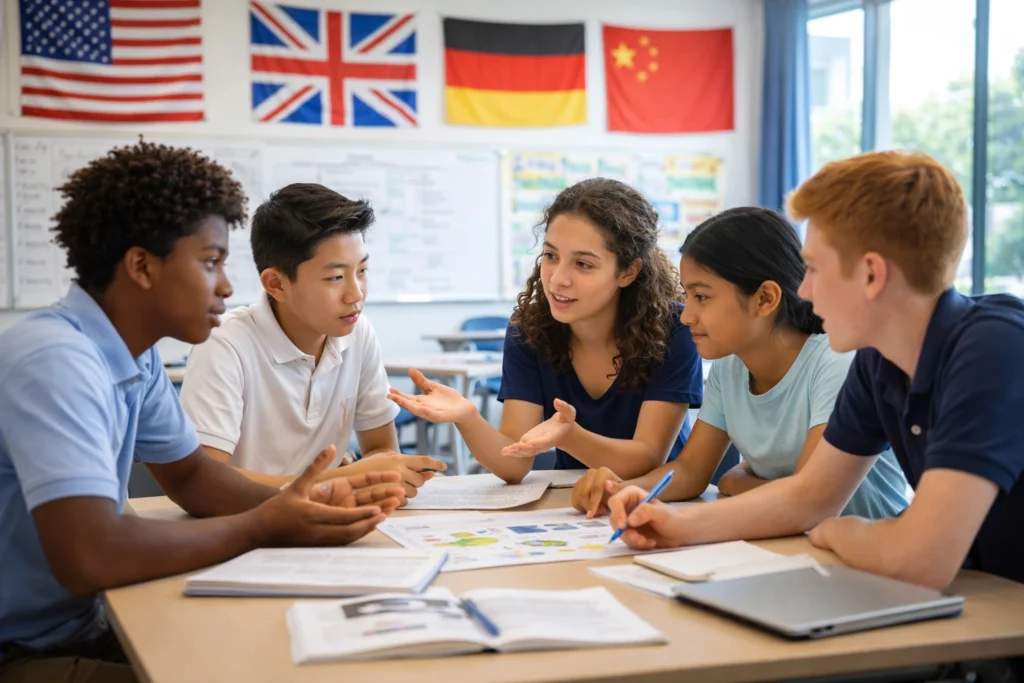
International curricula push students to question assumptions, compare viewpoints, and work through problems that rarely have a single correct answer. That is a meaningful difference in how students learn to think.
Put it this way, a student who can analyse a problem from three different angles will always have an edge over one who can only recall the right answer.
In international schools, lessons regularly involve real-world scenarios and collaborative problem-solving. Students practise weighing up multiple viewpoints before forming a conclusion, and that habit of thinking carries well beyond the classroom.
Bilingual Schools and the Case for Early Language Exposure
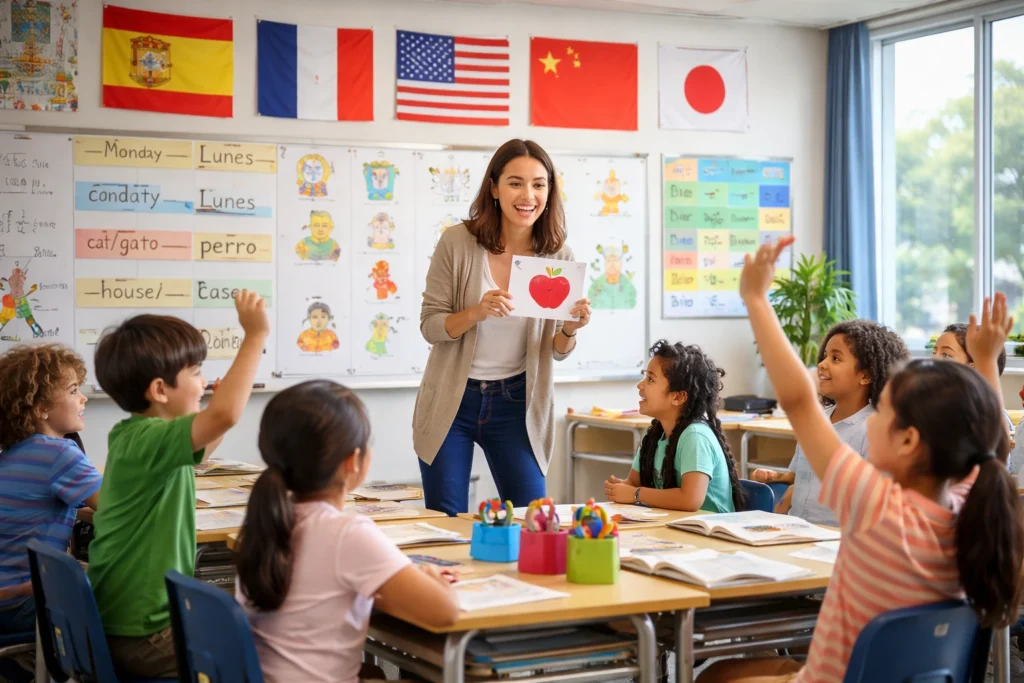
Children who attend a bilingual school before age ten retain languages far more effectively than those who start later. Basically, the window for language acquisition is real. Most education systems do not take full advantage of it.
Here is what early exposure does:
- Language Retention: Children in bilingual schools learn a second language through daily use across every subject. This immersive approach builds vocabulary, grammar, and comprehension simultaneously.
- Cognitive Development: Beyond language retention, young people who grow up bilingual consistently show stronger working memory, better concentration, and faster problem-solving ability.
- Cultural Awareness: We all believe that language gives students direct access to local culture. For example, students who speak a second language understand cultural norms, social expectations, and communication styles from the inside.
As we explained, bilingual education builds the kind of open, adaptable thinking that students carry with them long after they leave school. Research from U Education shows that bilingual children develop stronger problem-solving skills, better memory retention, and deeper cultural awareness.
Global Networks, Higher Education, and the Study Abroad Advantage
International education opens doors after school finishes. To be more specific, students who study within a global network gain far more than academic qualifications. They build connections, experience, and a track record that follows them into higher education and beyond.
The contrast between the two speaks for itself:
National School | International School | |
University Recognition | Limited to the home country | Accepted by universities worldwide |
Study Abroad Access | Rarely structured | Built into many programmes |
Global Network | Local peers and teachers | Institutions and contacts across different countries |
Language Preparation | Single language focus | Bilingual or multilingual ready |
Cultural Experience | Limited exposure | Embedded across all classes |
A university admissions officer in Edinburgh or Toronto will notice a study abroad record. It carries genuine weight in competitive applications.
According to HEPI research, the personal and financial benefits of higher education participation are at an all-time high. That includes all OECD countries, and students with an international education background are better positioned to take full advantage of that.
The Shift Has Already Started
More families are choosing international education, and the reasons are well-founded. Global curricula, bilingual schools, and structured study abroad programmes give children real, measurable advantages. Traditional schooling, for all its merits, rarely offers the same breadth of opportunity.
If you have made it this far, you already know the picture. This article has covered education trends, what international schools offer, and how global curricula build critical thinking. We have also touched down on why bilingual education and study abroad experience open doors at universities worldwide.
None of this has to feel overwhelming. At Juergens Meyer, our team will take you through every step you need to find the right international school for your child. The right education builds a foundation that stays with a child for life.
Your child’s future starts with one good decision.