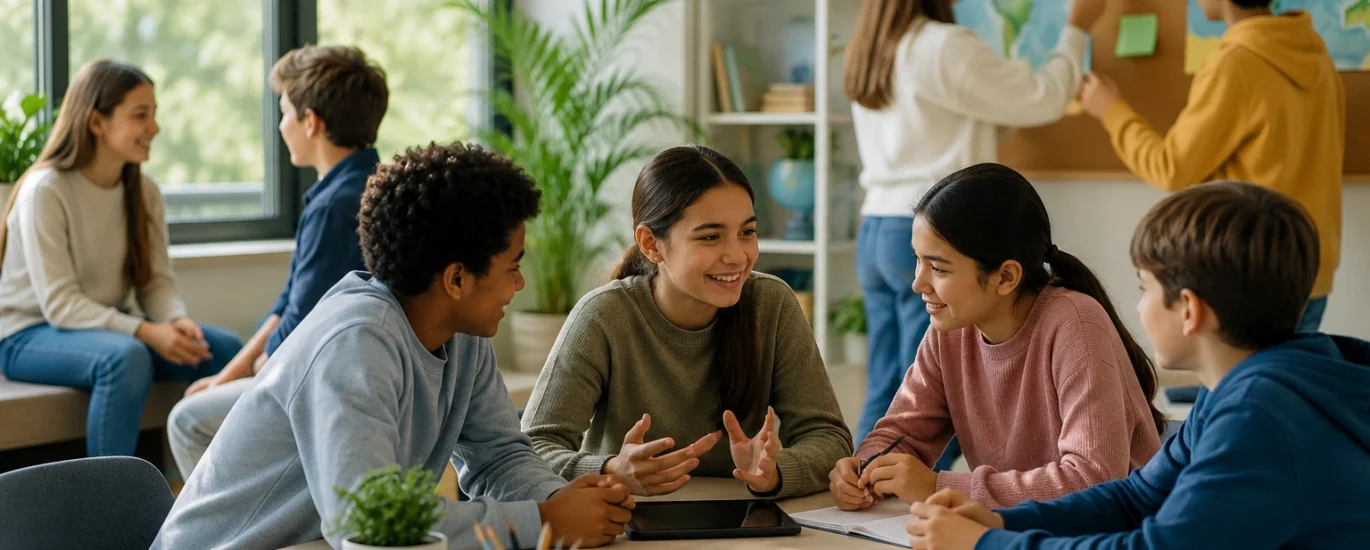
The most direct way schools build social awareness alongside academic success is by treating social development as part of holistic education. When schools do this well, students grow in confidence, communication, and real-world readiness.
But most teachers still treat social development as secondary to grades, and that gap shows up clearly once students leave education. It shows up in how they handle conflict, talk to people they disagree with, and cope when things do not go to plan.
This article covers what social awareness looks like in a school setting and how it connects to academic performance. We also look at the practical steps schools can take to build both without compromising one for the other.
Let’s jump in.
What Is Social Awareness in Education?
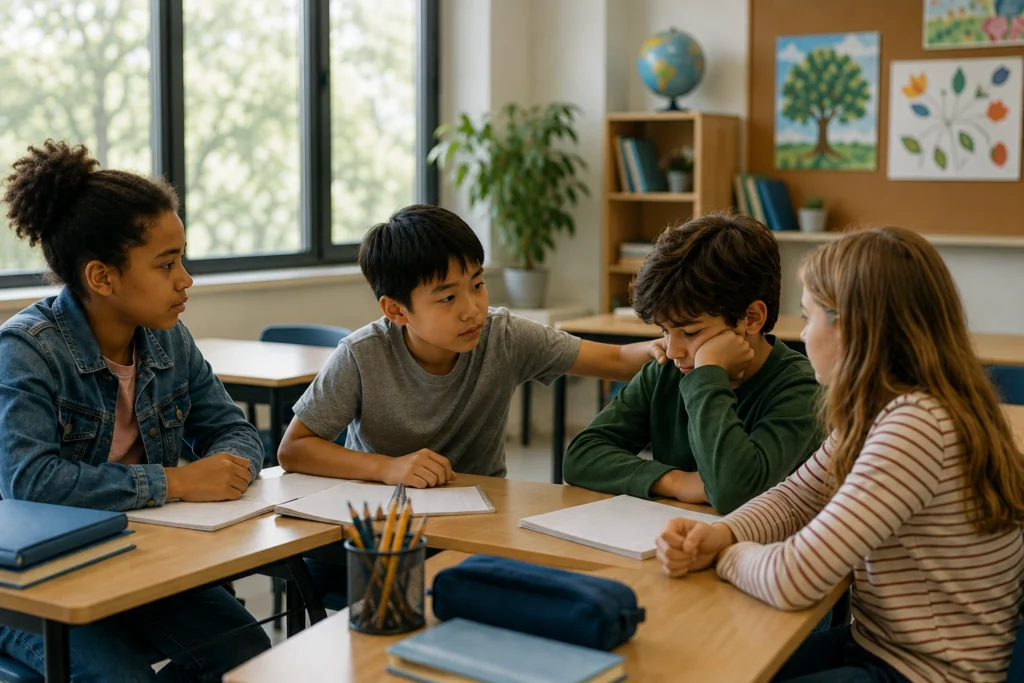
Social awareness is a child’s ability to understand how their actions, words, and attitudes affect the people around them. And since young people spend most of their day around peers, that ability is more valuable than most schools give it credit for.
In practice, it covers three connected areas:
- Self-Awareness: Students who understand their own emotions are far better placed to manage their behaviour. That counts in group work, peer conflict, and high-pressure situations where composure is everything.
- Positive Relationships: Without the ability to build positive relationships, students struggle in group settings. They fall behind in collaborative tasks and find it harder to ask for support when they need it most.
- Social-emotional Learning: Teachers who treat social-emotional learning as a core part of the curriculum see these skills grow consistently. Over time, those skills show up across every year group and every subject.
When schools develop all three, students perform better academically, behave better, and carry themselves with better self-esteem (most educators are still catching up on this).
Holistic Education and Academic Achievement
The Education Endowment Foundation found that social and emotional learning programmes boost academic achievement by an average of three months of additional progress. That is a significant finding, and it is not hard to see why.
Think of a marathon runner who only trains at pace and ignores nutrition and recovery. That runner will not finish the race well. Teachers who only focus on grades remove the very conditions that help students perform at their best.
In our experience working with schools, the ones that balanced social development with academic rigour through holistic learning consistently reported stronger student wellbeing. They also saw fewer behavioural issues and a noticeable improvement in how students engaged with their learning.
Experiential Learning and Critical Thinking
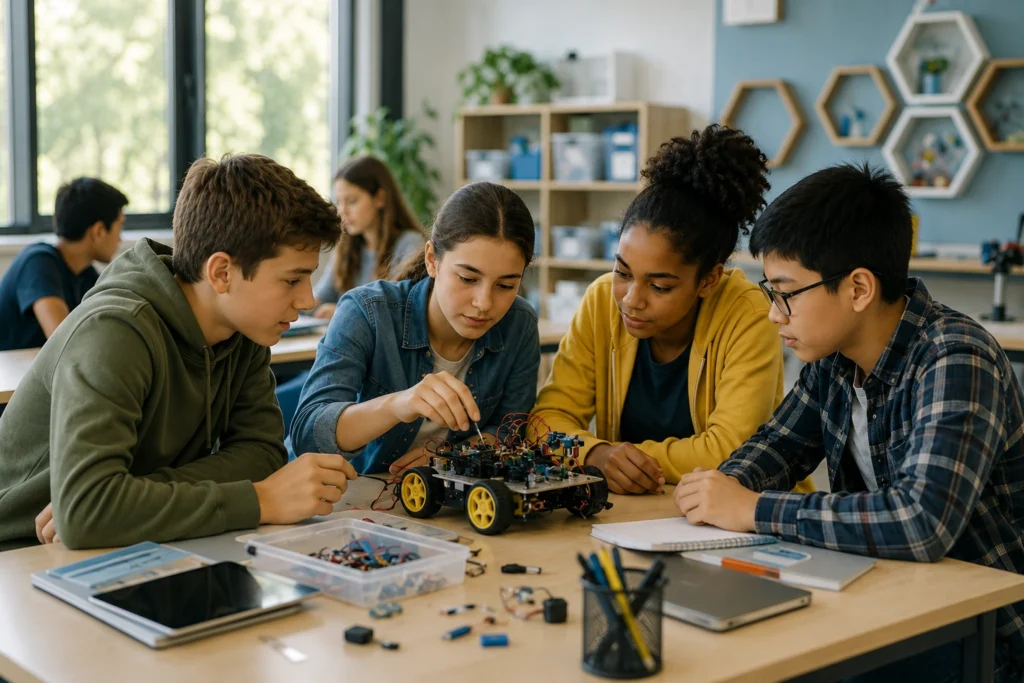
There is only so much a student can take in from the front of a classroom. Real learning tends to happen when students are actively involved in a task that requires them to think and respond.
Two areas in particular show how this works in practice:
Learning by Doing in the Classroom
A classroom debate, a community project, or a peer mentoring programme places students in situations that require active decision-making. And in that sense, the classroom is the rehearsal room, and the real world is the stage.
When students practise critical thinking in low-stakes environments, they build the confidence and the habit of applying it under pressure.
Reaching Different Learning Styles
Not every student absorbs information the same way. So lessons that move beyond instruction alone let students engage at their own pace, through methods that suit how they think. Teachers who build this flexibility into their planning find that students stay more engaged and hold on to what they learn far longer.
Students who learn through experience tend to hold on to those skills long after they leave school.
Student Voice, Self-Regulation, and Problem-solving
When students feel heard at school, their engagement and academic performance both improve. In fact, UNESCO links stronger self-regulation directly to better academic performance across all subjects (self-regulation is rarely taught directly, yet it predicts so much). And the way schools build that self-regulation counts.
Three things stand out in schools that handle this well:
- Student Voice: When students play a part in building classroom rules and shared goals, they take more ownership of their own behaviour. And when that happens, the whole classroom feels noticeably different.
- Self-regulation: Setbacks are inevitable. Students who develop self-regulation skills handle them with composure rather than frustration. That composure carries into exams, group work, and high-pressure situations throughout their school career.
- Problem-solving: Practising problem-solving in a structured environment builds self-confidence and develops a habit of thinking before reacting. Students who do this regularly handle conflict resolution with far greater ease.
A student with strong grades and none of these skills is only half prepared for what comes after school.
Life Skills and Academic Focus
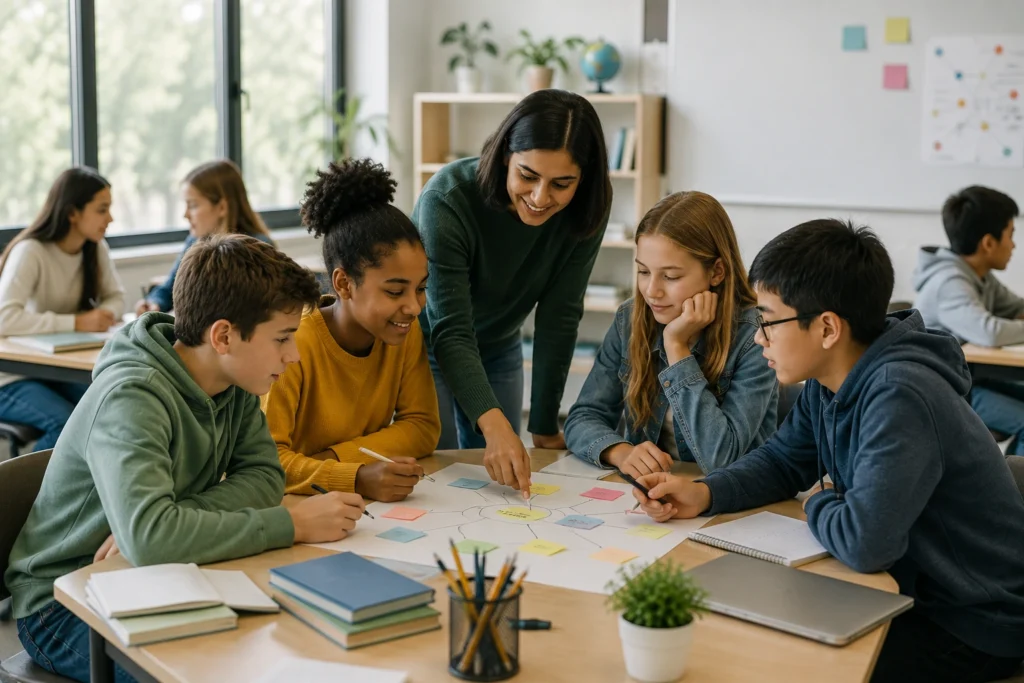
Skill development becomes a natural outcome when teachers have the right methods in place. Life skills like positive communication, problem-solving, and working with others reinforce students’ academic learning in the classroom every day.
In fact, many schools are already building these skills without realising it. A simple history lesson where students listen actively and consider multiple perspectives is already developing leadership skills in the room.
In our experience, the students who struggled most once they left school were rarely those with the lowest grades. More often, they were the ones who had never learned to ask for help or communicate under pressure.
Schools that take those skills seriously produce more settled, more confident students who are ready for everyday life. When that happens, academic success tends to follow (yes, even in small schools).
Academic Success Starts With the Whole Student
Social awareness and academic success are a pair. In fact, schools that treat them together produce students who are more confident, capable, and far better prepared for adult life.
This article has laid out the practical side of social awareness, covering experiential learning, student voice, life skills, and academic focus. Each one has a direct impact on how well your students perform, their well-being, and how they carry themselves out in the world.
At Juergens Meyer, our team will take you through every step of building a holistic approach that genuinely prepares your students for adult life. Our experts will help you through every stage of implementation.
Get in touch with us today to get started.