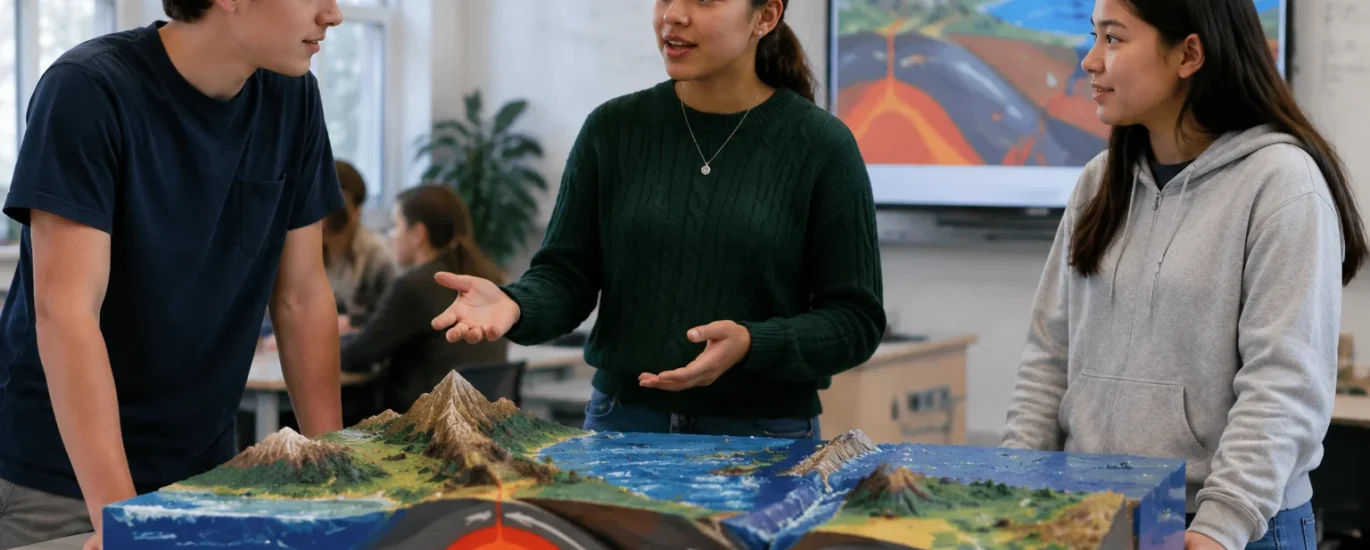
Beyond test scores and academic achievement, students gain confidence, life skills, and social awareness that serve them long after graduation. These holistic education benefits rarely appear on a report card. But they influence who your child becomes more than any grade will.
Informed parents already know that grades alone no longer define a child’s future. Yet most schools still measure success the same way they always have. Many parents wonder if the school is doing enough to prepare their child for what lies ahead.
We’ve worked with enough families to know that there is a significant gap. Here, we cover the qualities a rounded education builds in students, and what that development looks like in practice.
Holistic Education Benefits: More Than a Report Card
Holistic education looks at the whole child. That means academic results, yes, but also the confidence, social skills, and personal qualities that determine how a student moves through the world.
Day-to-day academic learning, such as honest feedback, group work, and student voice activities, all build those qualities steadily over time. Often, students don’t notice the progress until those qualities are put to the test.
Nobody gets fit after one gym session, and character development works the same way. Young people who develop these social and emotional skills handle pressure, setbacks, and responsibility better. And that traces back to the specific skills schools build every day.
Life Skills and Soft Skills That Travel With You
Life skills education builds abilities that stay relevant long after school ends. For instance, communication, self-management, and critical thinking don’t belong to any single subject, yet they hold up in careers, relationships, and everyday responsibilities. That’s precisely what makes them so transferable.
Let’s get specific:
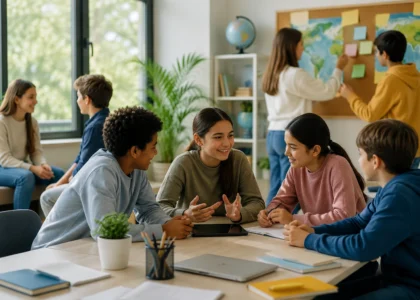
- Communication: Students learn to communicate effectively through daily discussion and group work. This kind of skills development in education grows through genuine interaction between students and teachers.
- Collaboration: Working in groups teaches students to listen, contribute, and reach decisions together.
- Focus and Self-Management: Time management and resilience develop through years of structured school life. Interestingly, employer research consistently finds that top academic achievers are rarely the fastest to adapt at work.
- Critical Thinking: A deeper learning approach trains students to question assumptions and think through problems independently. Those abilities feed directly into academic success, and as life becomes more demanding, they grow even more valuable.
- Problem-solving: The best way to develop problem-solving is through consistent, hands-on practice across different subjects. A science experiment teaches the same core habits as a history debate or a maths investigation, as long as students lead the process.
- Academic Success: Personal development and academic performance are connected. Students who build life skills consistently alongside their studies tend to show stronger results right across the board.
Soft skills and academic ability are most powerful in combination. Students who develop both are better prepared for careers, relationships, and real responsibility.
To develop these abilities, students need an environment that encourages them to speak up, take risks, and grow as people.
Confidence and Social Awareness: A School’s Role

Few environments teach social awareness as naturally as school does. Students learn to read a room, handle disagreement, and work with others through daily, real experiences.
Confidence doesn’t arrive fully formed either. It grows each time a student speaks up, leads a group, or pushes through a tough moment. And schools provide that practice ground every single day (most school reports miss this entirely).
In fact, research into social and emotional learning shows that effective SEL programmes add three months of extra progress a year, alongside measurable gains in attitudes to learning. A consistent, structured school experience produces that.
Practical Strategies for Whole-Student Development
A holistic approach works best when personal development is built into how teachers run lessons, rather than treated as an add-on. Here’s how that plays out in practice.
1. Leadership Skills and Critical Thinking
Teachers build leadership skills through group tasks, classroom debate, and shared decision-making. These activities push students to weigh options and reach their own conclusions independently.
Through our work with education providers, we’ve seen that the strongest students come from schools where reflection is part of every lesson. Flinders University research agrees that embedding critical thinking into daily lessons is one of the most valuable things schools can do.
2. Problem Solving and Decision Making
Problem-solving sticks when students practise it consistently across every subject. A science experiment, a history debate, or a maths investigation all build the same decision-making habits when students lead the process themselves.
That consistency creates lasting independence. Students who develop these habits early are simply better equipped for whatever comes next. If you think back to the skills that served you most after school, chances are they were not the ones tied to any single subject.
What Students Carry Into Real Life
The real test of any education is what students do after it ends. And the qualities built through a holistic approach are exactly what that test demands. In fact, confidence, problem-solving, social awareness, and responsibility don’t expire when the final bell rings.
And here’s what that development looks like once students step out into the world.
| Area | Real-Life Outcome |
| Workplace Readiness | Communicates clearly, adapts quickly, and works well in teams |
| Social Confidence | Engages well with peers, handles conflict constructively |
| Decision Making | Handles uncertainty calmly and makes sound decisions under pressure |
| Creativity and Empathy | Approaches problems with fresh thinking and consideration for others |
| Long-Term Responsibility | Takes ownership of actions and continues to develop beyond school |
Quick Note: These are qualities that structured school environments actively develop, year on year, in students who receive the right opportunities.
That raises an important question for parents choosing a school (employers have been making this point to the Central Bureau of Investigation for over a decade). The right school will have a clear answer to how it develops life skills, confidence, and social awareness alongside academics.
Help Your Child Grow in Every Direction
Judging a student by grades alone captures only a fraction of their development. The confidence, social awareness, life skills, and decision-making abilities students build alongside academics are what determine how far they go.
In this article, we covered how schools build confidence, life skills, social awareness, and critical thinking alongside academics. These are the holistic education benefits that stay with students long after graduation. And they deserve as much attention as any grade.
Juergens Meyer has helped countless families find schools that take holistic development seriously. Our team will cut through the noise, ask the right questions, and point you in the right direction.
Start that conversation today.